1 / 1
 Sihe Steel
Excellent resistance to oxidation and corrosion in various demanding environments.
Good mechanical strength, durability, and pressure resistance under stress.
Easily fabricated, bent, and welded into various complex structures.
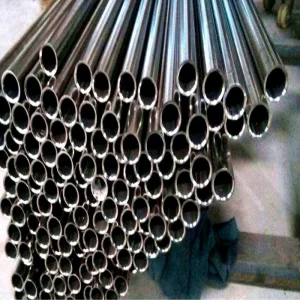
Ultra-smooth internal and external surfaces, ideal for medical and food-grade applications.
Performs consistently well in both extreme high and cryogenic temperatures.
| Element | Content (%) |
|---|---|
| Chromium (Cr) | 18.0–20.0 |
| Nickel (Ni) | 8.0–10.5 |
| Carbon (C) | ≤0.08 |
| Manganese (Mn) | ≤2.0 |
| Silicon (Si) | ≤1.0 |
| Phosphorus (P) | ≤0.045 |
| Sulfur (S) | ≤0.03 |
| Iron (Fe) | Balance |
| Property | Value |
|---|---|
| Density | 7.93 g/cm³ |
| Melting Point | 1400–1450°C |
| Thermal Conductivity | 16.2 W/m·K |
| Electrical Resistivity | 0.72 μΩ·m |
| Modulus of Elasticity | 193 GPa |
Hypodermic needles, surgical instruments, and medical-grade fluid channels.
Precision fluid control systems, chromatography, and high-accuracy sensors.
Fuel injection systems, hydraulic lines, and instrumentation tubing.
Dairy processing equipment, brewing lines, and sanitary systems.
High-purity fluid transfer and analytical instrument components.
They offer exceptional corrosion resistance, high structural strength, easy formability, and reliable performance across both extreme high and cryogenic temperatures. Their smooth internal surfaces also make them highly hygienic.
304 stainless steel typically consists of 18.0–20.0% Chromium (Cr) and 8.0–10.5% Nickel (Ni). The remainder is primarily Iron (Fe), with trace amounts of Carbon, Manganese, Silicon, Phosphorus, and Sulfur.
Yes, 304 stainless steel exhibits excellent weldability using standard commercial fusion techniques. It is highly formable, allowing it to be bent and shaped without compromising structural integrity.
The density of 304 stainless steel is 7.93 g/cm³, and its melting point range lies between 1400°C and 1450°C (2550°F to 2642°F).
Their smooth, seamless surface prevents bacterial buildup and allows for easy cleaning, sanitation, and sterilization. Combined with their high corrosion resistance, they prevent contamination in high-purity environments.