
Sihe Steel Sihe Steel

7 Tips for Sourcing Stainless Steel 304 Piping

Time:2026-10-15 Author:Liam
0%

Sourcing Stainless Steel 304 Piping requires more than comparing prices on a spreadsheet. Global stainless steel production reached about 58.4 million tonnes in 2023, according to the International Stainless Steel Forum. That scale creates opportunity, but it also increases variation among mills, traders, and documentation practices. A polished pipe may look identical to another, yet its chemistry, wall thickness, or heat treatment can differ significantly.

This guide presents seven practical tips for evaluating suppliers, specifications, and delivery risks. It considers ASTM A312 and ASTM A999 requirements, along with ASME B36.19M dimensional references. These standards help buyers check seamless or welded construction, outside diameter, schedule, mechanical properties, and test records. Ask for a material test report before approval. Verify the heat number on the pipe, bundle tag, and certificate. Small details matter.

Field experience shows that many sourcing problems begin before production. A vague purchase description can lead to the wrong finish, tolerance, or pressure rating. Supplier audits, sample inspections, and independent testing can reduce that uncertainty. However, no checklist removes every risk. Even a credible report may contain incomplete information, outdated assumptions, or translation errors. That deserves attention.

The following tips are designed for engineers, procurement teams, and distributors handling Stainless Steel 304 Piping. They connect technical evidence with practical supplier checks. The goal is not simply lower cost. It is dependable performance, traceable quality, and fewer surprises when the pipes reach the jobsite.
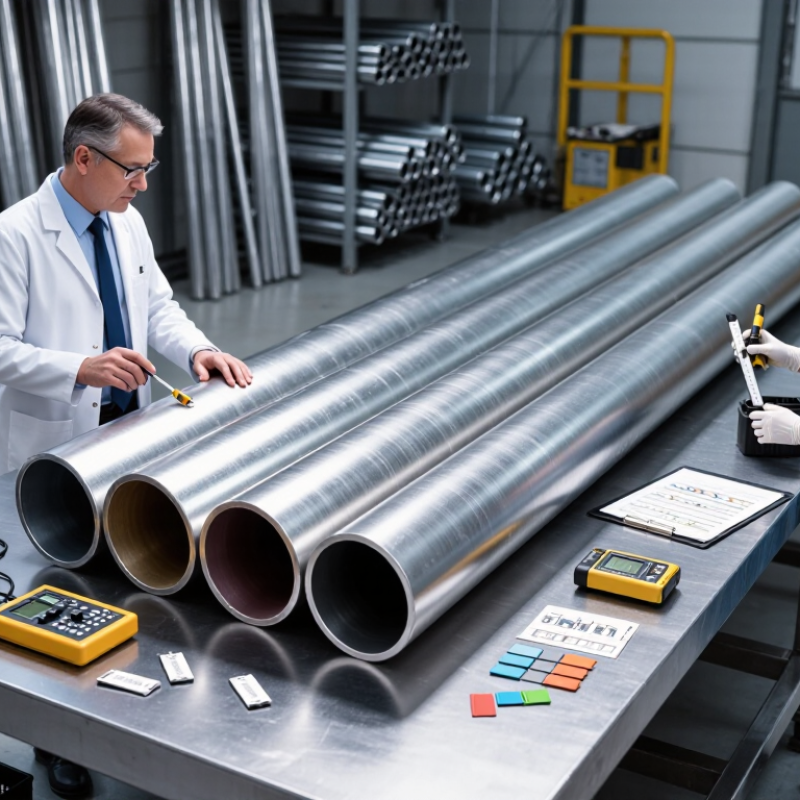
7 Tips for Sourcing Stainless Steel 304 Piping

Define Application Requirements and Confirm the 304 Grade

Before requesting quotations, define the piping application in practical terms. Record the fluid, operating temperature, pressure, flow rate, pipe size, connection type, and installation environment. Cleaning chemicals and exposure to salt or chlorides also matter. A 304 pipe may perform well with warm water, yet suffer early corrosion in chloride-rich service. Small details become expensive later.

Confirm that the offered material is genuinely stainless steel 304. Request the material test report, heat number, chemical composition, mechanical properties, and applicable manufacturing standard. For pressure piping, compare the specification with the project design code, such as ASTM A312 where appropriate. Positive material identification can provide additional confidence, especially when paperwork looks incomplete. Check that markings on the pipe match the documents and purchase order.

Do not confuse 304 with 304L without reviewing the welding requirements. The lower-carbon 304L grade may be more suitable for welded assemblies, but it should not be accepted automatically. Surface appearance is not proof of grade. A bright, polished pipe can still have the wrong chemistry. I once treated a clean finish as reassuring; that assumption needed correction. Specify dimensional tolerances, wall thickness, surface finish, and traceability before approval. Ask for sample records when possible, because vague certificates create avoidable sourcing risk.

Set Piping Dimensions, Standards, and Tolerance Requirements

Set pipe dimensions before requesting quotations. Specify nominal size, outside diameter, wall thickness, schedule, and cut length. For stainless steel 304, state whether the pipe is seamless or welded. Include service temperature, pressure, fluid, and connection type. These details prevent suppliers from pricing different products. Do not rely on “304” alone.

Cite the governing standards clearly, such as ASTM A312 TP304 and ASME B36.19M. If the project follows another system, name it directly. Confirm dimensional units and pipe end preparation. Define tolerances for outside diameter, wall thickness, ovality, straightness, length, and end squareness. Use standard limits unless the installation requires tighter control. Tighter limits can increase cost. Sometimes unnecessarily.

Request the material test certificate, heat number, chemical analysis, and mechanical results. Specify surface condition, weld appearance, and passivation requirements. Add positive material identification when grade mix-ups could create operational risk. Require hydrostatic or nondestructive testing when the service specification demands it. Check packing against scratches, moisture, and carbon-steel contamination. In field sourcing, omitted ovality limits can delay fit-up, even when diameter and thickness appear correct. A perfect specification is rarely written on the first attempt. Leave room for review.

7 Tips for Sourcing Stainless Steel 304 Piping

Set piping dimensions, standards, and tolerance requirements before requesting quotations.

1. Define nominal size

Specify NPS or DN, rather than relying on outside diameter alone.

2. Select the wall schedule

State the required schedule, such as 10S, 40S, or 80S.

3. Reference the correct standard

ASME B36.19M is commonly used for stainless steel pipe dimensions.

4. Confirm material requirements

Identify ASTM A312 and TP304 requirements when seamless or welded process pipe is needed.

5. Specify tolerances

Include outside-diameter, wall-thickness, length, ovality, and straightness limits.

6. Request inspection documents

Ask for chemical analysis, mechanical results, heat numbers, and dimensional inspection records.

7. Check end and surface finish

Define plain, beveled, or threaded ends and identify any required pickling or polishing.

Verify Supplier Capability, Certifications, and Material Traceability

7 Tips for Sourcing Stainless Steel 304 Piping

Supplier capability should match your actual piping requirements, not just a polished website. Ask for recent production records, available pipe sizes, wall thickness ranges, welding methods, and pressure-testing procedures. A capable supplier should explain how it controls ovality, surface defects, and dimensional tolerances. Request sample inspection reports from comparable orders. Details matter.

Check certifications carefully. Confirm the certificate issuer, scope, validity period, and covered production site. ISO 9001 can indicate a quality system, but it does not prove every pipe meets 304 requirements. Review the material test certificate, including chemical composition, mechanical properties, heat treatment, and applicable standards. Do not guess. Third-party inspection can add useful independence before shipment.

Material traceability should remain intact from the melting heat to the delivered bundle. Each pipe, tag, packing list, and certificate should carry a matching heat number. Ask whether positive material identification is performed, and clarify its method. X-ray fluorescence is useful for alloy screening, but it may not verify carbon content accurately. Keep records. I have seen paperwork look complete while one bundle carried a mismatched tag. That small error can delay installation and weaken confidence in the entire order. Before approving payment, compare markings, certificates, inspection results, and quantities line by line. Supplier responses should be specific, dated, and easy to audit.

Compare Pricing, Lead Times, and Total Procurement Costs

Sourcing stainless steel 304 piping requires more than comparing the lowest unit price. Request identical dimensions, schedules, surface finishes, testing, and delivery terms. Ask suppliers to separate material, fabrication, packaging, freight, inspection, and duties. A cheap quote can still be wrong.

The International Stainless Steel Forum reported global stainless steel production at about 58.4 million tonnes in 2023, down 5.2% year on year. Such shifts can affect mill allocation and lead times. Request a firm production window, shipment date, and stock confirmation. Add a contingency for customs or port delays. UNCTAD’s Review of Maritime Transport 2024 highlighted increased route disruption and freight volatility. Therefore, compare delivered cost, not only the ex-works figure. Small omission. Big invoice.

Track nickel exposure because 304 pricing can move with alloy surcharges. Ask whether the surcharge is fixed, indexed, or revisable before shipment. Compare at least three written offers using the same currency and delivery basis. Calculate total procurement cost per usable meter, including scrap, testing, storage, financing, and expedited freight. Verify certificates against purchase specifications, and check independent inspection requirements. In practice, buyers sometimes overvalue a two-week lead-time advantage. That decision may fail when receiving capacity is limited. A spreadsheet helps, but its assumptions deserve another review.

Inspect Quality, Documentation, Packaging, and Delivery Conditions

7 Tips for Sourcing Stainless Steel 304 Piping

Inspect Quality, Documentation, Packaging, and Delivery Conditions

Tip 1: Confirm the grade before price discussions.

Stainless Steel 304 should match ASTM A312 or the project’s stated specification. Check heat numbers on pipes, fittings, and packing lists.

Tip 2: Inspect surfaces under bright, angled light.

Look for deep scratches, dents, pits, brown staining, and rough welds. A clean appearance is not enough.

Tip 3: Request chemical and mechanical test reports.

Verify chromium, nickel, tensile strength, and yield strength against the purchase standard. The World Stainless 2023 statistics reported about 58.4 million tonnes of global stainless production, so traceability matters across complex supply chains.

Tip 4: Require material certificates with heat-level traceability.

EN 10204 Type 3.1 documentation is often more useful than a generic certificate.

Tip 5: Match every certificate to the actual markings.

One repeated heat number can expose a serious paperwork weakness. The NACE IMPACT study estimated annual corrosion costs near 3.4% of global GDP. Incorrect material selection can increase that risk. I have seen rushed receiving checks miss small pits near weld areas.

Tip 6: Examine packaging before unloading.

End caps should remain fitted, surfaces should be separated, and wooden supports should not leave contamination.

Tip 7: Record delivery conditions with dated photographs.

Note wet wrapping, damaged pallets, missing bundles, and truck delays. A useful improvement is adding a receiving checklist, although checklists can become careless paperwork when nobody reviews them. Ask for dimensional records, packing lists, and inspection evidence before approving payment.

FAQS

How can I verify a supplier’s actual piping capability?

Ask for recent production records, available sizes, wall thicknesses, welding methods, and pressure-testing procedures. Details matter. Request inspection reports from similar orders.

What production controls should a capable supplier explain?

The supplier should describe controls for ovality, surface defects, and dimensional tolerances. Ask for measurable limits, inspection methods, and dated evidence.

Which certification details require careful checking?

Confirm the issuer, scope, validity period, and covered production site. A quality-system certificate does not prove every pipe meets 304 requirements. Do not guess.

What should a material test certificate include?

Review chemical composition, mechanical properties, heat treatment, and applicable standards. Compare every value with your purchase specification.

How should material traceability be maintained?

Each pipe, tag, packing list, and certificate should show the same heat number. Keep records. One mismatched bundle can delay installation.

Is positive material identification necessary?

It can add confidence before shipment. Ask how identification is performed. Alloy screening may not accurately verify carbon content, so paperwork alone seems insufficient.

How should I compare supplier prices?

Request identical dimensions, schedules, finishes, testing, and delivery terms. Separate material, fabrication, packaging, freight, inspection, and duties. A cheap quote can still be wrong.

What costs belong in the delivered price?

Include scrap, testing, storage, financing, freight, customs charges, and possible expedited delivery. Compare total cost per usable meter, not only the factory price.

How can I manage lead-time and pricing uncertainty?

Request stock confirmation, a production window, and a shipment date. Check alloy surcharges and freight risks. Add contingency time. My spreadsheet assumptions need review.

Conclusion

Sourcing Stainless Steel 304 Piping successfully starts with a clear understanding of the intended application, including operating temperature, pressure, fluid compatibility, and environmental conditions. Buyers should confirm that the material is genuinely 304 grade and define the required pipe dimensions, wall thickness, connection method, applicable standards, and acceptable tolerances. These details help prevent compatibility issues and ensure reliable performance during installation and service.

Supplier evaluation is equally important. Review manufacturing capabilities, quality certifications, inspection procedures, and material traceability records before placing an order. Compare not only unit prices, but also lead times, shipping charges, inspection costs, and other factors that affect total procurement expenses. Before acceptance, verify product quality and documentation, including test reports and certificates. Finally, check that Stainless Steel 304 Piping is properly protected, packaged, labeled, and delivered under suitable conditions to minimize damage, contamination, or delays.

Liam

Liam

Liam is a dedicated marketing professional with a profound expertise in the industry, where he excels at highlighting the unique advantages of our core products. With a keen understanding of market trends and consumer needs, Liam frequently updates our company’s professional blog, providing......