 Sihe Steel
For global buyers, Stainless Steel Coil Piping is more than a polished metal tube. It is a practical choice shaped by pressure, temperature, fluid chemistry, installation space, and maintenance access. A coil that performs well in a food-processing line may fail quickly in a chloride-rich coastal system. Details matter.
Welding authority John C. Lippold has stated, “The performance of stainless steel depends on its metallurgy, fabrication, and service environment.” This principle guides our review of the top ten Stainless Steel Coil Piping types. Buyers should examine grades, wall thickness, coil length, surface finish, forming limits, and connection methods before comparing prices. A bright finish looks impressive. It does not automatically guarantee corrosion resistance.
The upcoming outline compares common options for instrumentation, heat transfer, hydraulic control, refrigeration, chemical processing, and sanitary service. It also considers seamless and welded construction, 304 and 316L grades, duplex alloys, and precision tubing. Each type has strengths. Each has trade-offs.
Some specifications remain easy to overlook.
For example, a long coil can reduce joints but complicate transport and field handling. A smaller outside diameter may improve routing but restrict flow. Polished tubing can support hygiene, yet careless bending can damage its surface. Global buyers must question certificates, testing records, dimensional tolerances, and supplier experience. No single piping type suits every project. That assumption deserves correction.
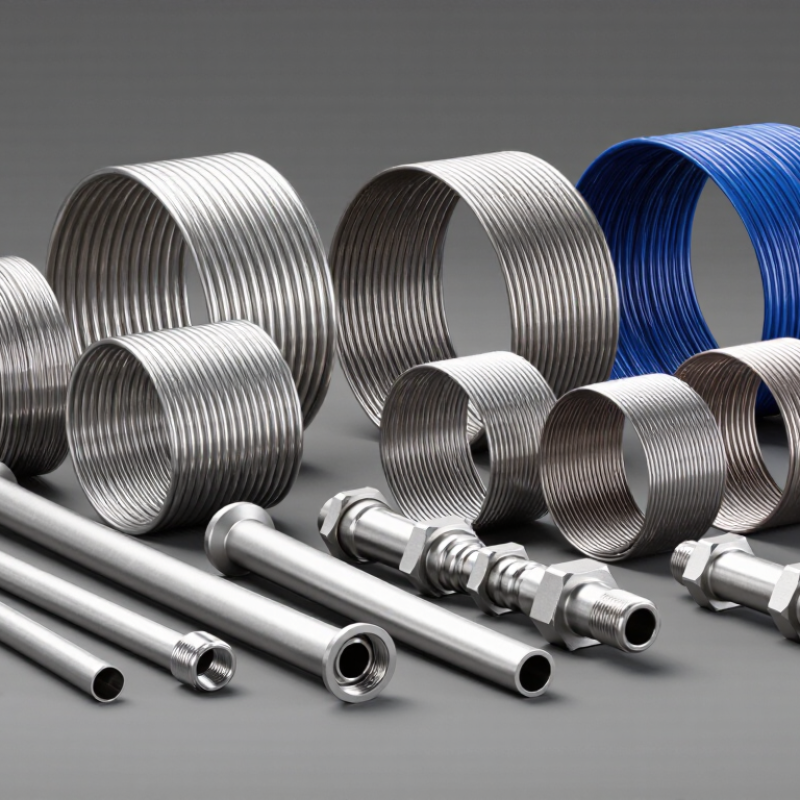
Stainless steel coil piping is a continuous tube wound into a compact spiral for fluid transfer, heat exchange, and instrumentation. Its structure includes the tube wall, internal bore, coil pitch, end connections, and support frame. Common options include seamless and welded construction, with material grades selected for temperature, pressure, and corrosion exposure. In practice, buyers should verify wall thickness, ovality, surface finish, and hydrostatic test records, not only the nominal diameter.
The value is practical. Long continuous lengths reduce joint count, leakage points, and installation time. The coil also stores efficiently and can follow tight equipment layouts. Stainless steel’s chromium-rich passive layer supports corrosion resistance, although chloride environments still demand careful grade selection and cleaning. The NACE IMPACT study estimated global corrosion costs at about 3.4% of global GDP, or roughly 2.5 trillion dollars annually. Better material selection can reduce part of that burden. Not every failure is a material failure.
Industry scale also matters. The International Stainless Steel Forum reported global stainless steel crude production of approximately 58.4 million tonnes in 2023. This large supply base supports wider access to formed tubing and qualified fabrication capacity. Yet production volume does not guarantee suitability. A small bend-radius error may restrict flow, while poor end preparation can damage an otherwise sound coil. Buyers should compare pressure ratings, cleanliness controls, traceability, and third-party inspection requirements. Compact is useful. Universal is not.
A practical comparison of common stainless steel coiled tubing constructions, standards, material options, dimensions, and typical international applications.
| Rank | Coil Piping Type | Typical Construction | Common Material Grades | Reference Standards | Typical Outside Diameter | Typical Wall Thickness | Core Advantages | Common Applications | Buyer Considerations |
|---|---|---|---|---|---|---|---|---|---|
| 1 | Seamless Stainless Steel Coiled Tubing | Cold-drawn or cold-worked tube manufactured without a longitudinal weld. | 304/304L, 316/316L, 321, 347 | ASTM A213, ASTM A269, ASTM A632; EN 10216-5 | Approximately 3–25 mm | Approximately 0.3–3.0 mm | High pressure reliability Uniform bore and strong resistance to cyclic service. |
Instrumentation, hydraulic control lines, chemical injection, downhole and process systems. | Check pressure rating, heat treatment, eddy-current or hydrostatic testing, and coil length. |
| 2 | Welded Stainless Steel Coiled Tubing | Strip formed into a tube and longitudinally welded, then sized and finished. | 304/304L, 316/316L, 321 | ASTM A269, ASTM A249; EN 10217-7 | Approximately 6–50 mm | Approximately 0.5–3.0 mm | Cost-efficient Good dimensional consistency and long continuous lengths. |
Heat exchangers, general process piping, air and gas lines, utility systems. | Confirm weld quality, weld-zone inspection, surface finish, and allowable bending radius. |
| 3 | Instrumentation Coil Tubing | Precision seamless or welded tubing supplied in continuous coils for instrument connections. | 316/316L, 304/304L, 321 | ASTM A269, ASTM A632; ASME B31.3 design practice where applicable | Commonly 6, 8, 10, 12, and 16 mm | Commonly 0.5–2.0 mm | Low leakage risk Easy routing, fewer fittings, and reduced installation time. |
Pressure transmitters, control panels, analytical instruments, and impulse lines. | Specify tube OD, wall, hardness, surface finish, maximum working pressure, and end connections. |
| 4 | Hydraulic and High-Pressure Coil Tubing | Precision cold-drawn tubing with controlled wall thickness and high mechanical strength. | 316/316L, 304L, 17-4 PH for selected high-strength designs | ASTM A269 or project-specific hydraulic tubing requirements | Approximately 6–25 mm | Approximately 1.0–4.0 mm | Pressure capable Suitable for compact routing and repeated forming. |
Hydraulic power units, actuators, pressure-control equipment, and offshore systems. | Use the manufacturer’s pressure calculation; account for temperature, fatigue, and bending stresses. |
| 5 | Capillary Stainless Steel Coil Tubing | Small-bore seamless or welded tubing with a narrow internal diameter. | 304/304L, 316/316L, 316Ti | ASTM A632, ASTM A269; EN 10216-5 for applicable seamless products | Approximately 0.5–6 mm | Approximately 0.1–1.0 mm | Compact and precise Low internal volume and suitability for restricted spaces. |
Temperature sensing, pressure measurement, sampling lines, chromatography, and laboratory equipment. | Control ovality, internal cleanliness, plugging resistance, minimum bend radius, and flow rate. |
| 6 | Heat Exchanger and Condenser Coil Tubing | Seamless or welded tubing formed into coils, serpentine sections, or hairpin assemblies. | 304/304L, 316/316L, 321, 347 | ASTM A213, ASTM A249, ASTM A269 | Approximately 6–38 mm | Approximately 0.5–3.5 mm | Efficient heat transfer Long continuous lengths help reduce joints and potential leak points. |
Condensers, evaporators, coolers, boilers, and process heat-transfer equipment. | Evaluate thermal duty, fouling allowance, corrosion conditions, cleanliness, and tube-side pressure drop. |
| 7 | Duplex Stainless Steel Coiled Tubing | Seamless or welded coiled tubing using a ferritic-austenitic stainless steel structure. | 2205, 2507 and other qualified duplex grades | ASTM A789; ASTM A790 for pipe-related requirements; EN 10216-5 or EN 10217-7 where applicable | Approximately 6–25 mm | Approximately 0.7–3.0 mm | High corrosion resistance Higher strength than common austenitic grades and good chloride resistance. |
Seawater systems, offshore equipment, chemical processing, and oil and gas control lines. | Require correct solution annealing, ferrite balance, impact testing where specified, and chloride-service review. |
| 8 | Sanitary and Hygienic Coiled Tubing | Seamless or welded tubing with smooth internal surfaces and hygienic end preparation. | 304L, 316L | ASTM A270; ASME BPE for applicable bioprocess systems | Approximately 6–50 mm | Approximately 0.5–2.0 mm | Easy to clean Low surface roughness and reduced product-retention risk. |
Food and beverage, pharmaceutical, biotechnology, cosmetics, and clean utilities. | Specify Ra value, orbital-weld compatibility, passivation, electropolishing, and hygienic packaging. |
| 9 | Steam and Boiler Coil Tubing | Heat-resistant seamless or welded tubing designed for elevated-temperature service. | 304H, 316H, 321H, 347H and selected nickel-alloy alternatives | ASTM A213; ASTM A249 for applicable welded heat-exchanger tubing | Approximately 6–38 mm | Approximately 1.0–4.0 mm | High-temperature service Maintains strength and oxidation resistance within the specified design range. |
Steam generators, thermal-oil systems, superheaters, and industrial heating equipment. | Verify design temperature, creep considerations, oxidation conditions, weld qualification, and code requirements. |
| 10 | Armored or Bundled Multi-Core Coil Tubing | Several stainless steel tubes assembled together, sometimes with insulation, shielding, or protective armor. | 316/316L, 304/304L, duplex 2205 | ASTM A269 or A789 for individual tubes; project-specific assembly specifications | Individual tubes commonly 3–16 mm | Individual tube walls commonly 0.5–2.0 mm | Integrated routing Combines multiple fluid, hydraulic, or signal lines in one protected package. |
Offshore platforms, subsea controls, wellhead systems, analyzer packages, and remote instrumentation. | Define core count, service separation, armor material, minimum installation radius, temperature, and pressure. |
It is a continuous stainless steel tube wound into a compact spiral. It transfers fluids, supports heat exchange, and serves instrumentation systems.
Key parts include the tube wall, internal bore, coil pitch, end connections, and support frame. The winding must remain consistent.
Long lengths reduce joints, leakage points, and installation time. The compact coil can fit around tanks, frames, and narrow equipment layouts. Fewer joints help.
Grade 304 suits general water, food, and industrial service. Grade 316L offers better resistance near chlorides. Grade 321 handles heated process lines, while duplex grades suit stronger pressure service.
Check temperature, pressure, fluid chemistry, chloride exposure, and cleaning chemicals. A chloride-rich environment may cause pitting without suitable selection. Grade alone is not enough.
Welded tubing often suits general fluid transfer and moderate service. Seamless tubing may fit higher pressure or demanding thermal applications. The application decides.
Confirm outside diameter, wall thickness, coil length, ovality, pitch, and minimum bending radius. Also check end preparation and surface finish. Nominal diameter alone is insufficient.
Request material certificates, heat numbers, dimensional reports, pressure-test records, and traceability documents. Welding procedures and inspection records may also matter. Paperwork needs checking.
Include forming, inspection, freight, packing, installation, and possible rework. Damaged coil edges can create field problems. Cheap can cost more.
Stainless Steel Coil Piping is a flexible, corrosion-resistant piping solution manufactured in coiled lengths for efficient storage, transport, and installation. Its structure typically combines a stainless steel alloy, controlled wall thickness, and a smooth internal surface, delivering reliable flow performance, durability, and reduced connection requirements. This overview introduces the key standards used to classify the top ten types, including material grade, pressure rating, dimensions, surface finish, temperature resistance, and intended service conditions.
The top ten Stainless Steel Coil Piping types can be distinguished by alloy composition and application, such as fluid transfer, heat exchange, instrumentation, hydraulic systems, and demanding industrial environments. Global buyers should compare each option according to size, grade, corrosion resistance, compliance requirements, total cost, delivery expectations, and supplier capability. A suitable selection balances technical performance with regional standards, project conditions, long-term maintenance needs, and consistent manufacturing quality, helping buyers choose piping that is safe, economical, and appropriate for their specific market.
