
Sihe Steel Sihe Steel

China Top 10 310S Stainless Steel Pipe Manufacturers

Time:2026-09-25 Author:Liam
0%

China’s stainless-steel industry serves demanding sectors, from petrochemical plants to high-temperature power systems. This introduction examines China’s top 10 310s Stainless Steel Pipe manufacturers through practical quality indicators.

The focus is not only production volume. It includes chemical composition, wall-thickness control, heat-treatment records, welding quality, surface finish, and traceability. These details matter when pipes face furnace gases, chloride exposure, or repeated thermal cycling. A bright surface alone proves little. Test certificates matter more.

John C. Lippold, a respected welding-metallurgy expert, states, “Successful stainless-steel performance begins with controlling metallurgy.” His observation is especially relevant to 310S, where chromium, nickel, carbon, and welding procedures influence service reliability. Buyers should check whether manufacturers follow ASTM A312, ASME, or equivalent requirements. Independent inspection can reveal problems hidden behind polished packaging.

The selected companies are compared using factory capability, export experience, dimensional consistency, and after-sales support. Site audits, sample testing, and mill certificates provide stronger evidence than promotional claims. Some rankings may remain imperfect, because public factory data is not always complete. That limitation deserves attention.

Real purchasing decisions are rarely simple. Price, delivery speed, customization, and long-term performance must be balanced. A cheaper pipe may create expensive replacement work later. Conversely, the highest quoted price does not automatically guarantee superior quality.

This guide offers a practical starting point for engineers, distributors, and project buyers seeking dependable Chinese suppliers. Verify every critical specification before ordering. That step is easy to skip. It should not be.
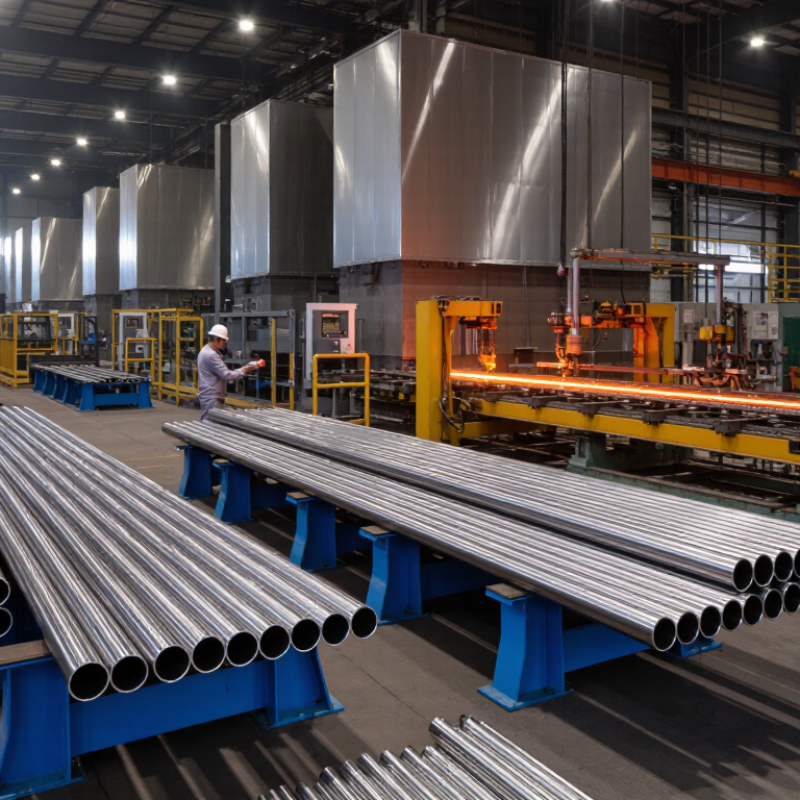
China Top 10 310S Stainless Steel Pipe Manufacturers

Understanding 310S Stainless Steel Pipe and Its Industrial Applications

Understanding 310S Stainless Steel Pipe and Its Industrial Applications

310S stainless steel pipe is an austenitic alloy designed for heat-intensive service. It typically contains 24–26% chromium and 19–22% nickel, with carbon limited to 0.08% under ASTM A312 requirements. This chemistry supports oxidation resistance and helps retain strength during repeated heating. The International Stainless Steel Forum reported global crude stainless steel production at about 58.4 million tonnes in 2023. That scale reflects stainless steel’s importance in energy, chemical processing, and high-temperature equipment.

In practical plants, 310S pipe carries hot air, combustion gases, and process fluids. It appears in furnace components, heat-treatment lines, petrochemical units, and thermal processing systems. Depending on atmosphere and loading, engineers may use it near 1,000°C, but this is not a universal service limit. Sulfur-rich gases, thermal cycling, and weld design can reduce performance. ASTM and ASME requirements still govern dimensions, testing, pressure design, and installation.

The detail matters.

A polished surface is not enough. Mill certificates, heat numbers, solution treatment, and radiographic or hydrostatic testing should support traceability. I have seen specifications focus on chromium and nickel while overlooking support spacing and expansion. That is a costly weakness. 310S resists heat well, yet it is not immune to carburization, corrosion, or creep. Manufacturer selection should therefore compare verified chemistry, manufacturing control, weld quality, and documented service experience—not price alone.

How China’s 310S Pipe Manufacturers Are Evaluated

China’s 310S pipe manufacturers should be evaluated on verifiable production evidence, not catalogue claims alone. 310S is an austenitic stainless steel used where oxidation resistance at elevated temperatures matters. That does not make every pipe suitable for every corrosive or high-temperature service.

Buyers should check material certificates, heat numbers, and chemical composition, then confirm that records match the supplied pipes. Independent testing may be appropriate for critical orders. Not just a catalogue.

Review how the manufacturer controls forming, welding, heat treatment, and dimensional tolerances. Ask for inspection records showing wall thickness, outside diameter, and weld examination where applicable.

A clean weld bead looks reassuring, but appearance alone cannot prove internal quality.

Confirm the relevant product standard and inspection scope for the intended application; requirements can differ. Small details matter. Packaging, identification, and traceability should remain clear when pipes arrive at the job site.

Compare sample results with later production, and check how promptly technical questions receive specific answers. No scorecard captures every production shift, so one factory visit or sample inspection should not replace ongoing checks.

Profiles of China’s Top 10 310S Stainless Steel Pipe Manufacturers

China’s leading 310S stainless steel pipe manufacturers differ in scale, product range, and technical focus. Some specialize in seamless pipes for high-temperature service; others make welded tubes in varied diameters and wall thicknesses. Their profiles are best compared through measurable details, not broad claims. Check material certificates, dimensional tolerances, and inspection records.

A capable producer should understand 310S chemistry and its use in oxidation-prone, elevated-temperature environments. Ask how each batch is identified and tested. Useful checks may include chemical analysis, visual inspection, and pressure or nondestructive testing when the application requires them. Strong documentation matters. So does clear communication about delivery schedules and custom specifications.

The top ten are not necessarily interchangeable. One may offer more sizes, while another may handle small, tailored orders with closer technical support. Buyers should match production capacity to the project, then verify the details directly. A polished profile is not proof of consistent quality. I would also avoid assuming that every 310S pipe suits every hot-service condition; design temperature, atmosphere, and fabrication all matter. Some comparisons remain imperfect without current factory audits and sample testing.

China Top 10 310S Stainless Steel Pipe Manufacturers - Profiles of China’s Top 10 310S Stainless Steel Pipe Manufacturers

Company names, rankings, and company-specific production claims are omitted. The table below provides ten factual technical and purchasing checkpoints for comparing 310S stainless steel pipe suppliers; it does not represent verified profiles of ten individual manufacturers.

No. Comparison Dimension Relevant 310S Data What Buyers Can Verify
1 Material designation ASTM/ASME designation: TP310S; UNS number: S31008. Check that the material designation on the quotation, marking, and material test certificate matches the purchase specification.
2 Common product standard ASTM A312/A312M covers seamless, welded, and heavily cold-worked austenitic stainless steel pipe; TP310S is a listed grade. Confirm the applicable edition, manufacturing route, and grade are stated in the order documents.
3 Typical chemical composition For 310S, the specified ranges include chromium 24.0–26.0% and nickel 19.0–22.0%; carbon is limited to 0.08% maximum under ASTM A312 chemistry requirements. Compare the heat analysis on the mill test certificate with the governing standard and purchase order.
4 Product-form distinction ASTM A312 applies to pipe. ASTM A213 is a separate standard for seamless ferritic and austenitic alloy-steel boiler, superheater, and heat-exchanger tubes. Check whether the item required is pipe or tube, and ensure the quoted standard matches that product form.
5 Dimensions and schedules ASME B36.19M provides dimensions for stainless steel pipe, including commonly specified schedules such as 5S, 10S, 40S, and 80S. Specify nominal pipe size, schedule or wall thickness, outside diameter, length, and dimensional standard.
6 Manufacturing route ASTM A312 includes seamless, welded, and heavily cold-worked pipe categories. Request the manufacturing route and verify that it is permitted by the ordered specification and suitable for the intended service.
7 Temperature-related selection 310S is a high-alloy austenitic stainless steel commonly selected for elevated-temperature service. Actual performance depends on temperature, atmosphere, load, and exposure time. Ask for application-specific engineering review rather than relying on a single maximum-temperature figure.
8 Inspection and testing ASTM A312 specifies applicable testing and examination requirements, which vary with product type and order details. Identify required tests, inspection extent, acceptance criteria, and any additional purchaser requirements in the contract.
9 Traceability documentation A material test report can document heat identification and reported chemical and mechanical test results for the supplied material. Match heat numbers on the report, pipe markings, and shipping records; specify documentation requirements before ordering.
10 Quotation comparability Price comparisons are meaningful only when grade, standard, size, schedule, manufacturing route, quantity, finish, inspection, and delivery terms are aligned. Use a common technical datasheet and purchase specification when requesting quotations from suppliers.

Manufacturing Capabilities, Product Standards, and Quality Control

When comparing China’s top 10 310S stainless steel pipe manufacturers, look beyond production volume. Check whether they make seamless, welded, or both pipe types, and whether their equipment supports the required diameter, wall thickness, and finish. Ask for recent inspection records from comparable orders. Details matter.

A reliable supplier should identify the applicable standard and grade on its offer. ASTM A312 commonly covers austenitic stainless steel pipe, including TP310S; confirm the exact specification, dimensions, and testing requirements for each order. Heat-number traceability should connect the material certificate to the delivered pipes. A certificate is useful, but it is not the whole story.

Quality control may include chemical analysis, dimensional checks, visual inspection, and hydrostatic or nondestructive testing where specified. For welded pipe, ask how weld seams are examined and recorded. These checks help reveal issues such as uneven wall thickness or surface defects. Not always. 310S offers strong high-temperature oxidation resistance, but performance depends on temperature, atmosphere, and service conditions. A manufacturer’s technical team should discuss those limits plainly, rather than treating the grade as suitable for every hot process.

How to Compare Suppliers and Select a 310S Pipe Manufacturer

A useful comparison starts with the intended service conditions, not the lowest quoted price. For 310S stainless steel pipe, share operating temperature, pressure, medium, dimensions, and connection details with each supplier. Then compare their material certificates, heat-number traceability, chemical analysis, and dimensional tolerances. A 310S label alone does not confirm that every pipe in a shipment matches your specification.

Ask how pipes are formed and welded, where applicable, and what inspection records are available. Check whether testing, surface condition, and end preparation match the purchase requirements. Request a sample document pack before ordering; it can reveal missing fields or unclear traceability early. Small details matter. Compare delivery estimates, minimum order quantities, packaging, and how the supplier handles nonconforming material. Confirm that stated standards fit your project rather than assuming one specification covers every application. No checklist is perfect. A low price may be reasonable, but only when scope and quality controls are comparable. Record unanswered questions, too; supplier comparisons can look neat on paper while leaving practical gaps.

FAQS

What evidence should I request from a 310S pipe manufacturer?

Request material certificates, heat numbers, and chemical analysis. Check that the records match the delivered pipes. Not just claims.

What project details should I share when comparing suppliers?

Provide operating temperature, pressure, service medium, dimensions, and connection details. These details help suppliers quote against the same requirements.

Can a clean weld bead confirm pipe quality?

No. A smooth bead may look reassuring, but it cannot prove internal weld quality. Ask for applicable inspection records.

How can I compare prices fairly?

Compare prices only when product scope and quality controls are similar. Review testing, tolerances, surface condition, and end preparation.

Why request a sample document pack before ordering?

It can reveal missing certificate fields or unclear traceability early. Small details matter.

Does every 310S pipe meet the same standard?

No. Confirm that the stated standard and inspection scope fit your application. Requirements can vary with service conditions.

What delivery details should I check?

Compare delivery estimates, minimum order quantities, and packaging. Confirm that pipe identification stays clear when the shipment arrives.

Are a factory visit or sample inspection enough?

They offer useful evidence, but production can change between checks. Compare later sample results and note unanswered questions. A tidy scorecard may still miss practical gaps.

Conclusion

This article explains the properties of 310S Stainless Steel Pipe and why it is used in demanding industrial environments where heat resistance, durability, and reliable performance are important. It outlines the factors used to evaluate Chinese manufacturers, including production capacity, technical expertise, product range, consistency, and ability to meet project requirements. The manufacturer profiles are intended to help readers understand the different capabilities available across the market without treating one supplier as suitable for every application.

The article also reviews manufacturing processes, relevant product standards, and quality-control practices, such as material verification and dimensional inspection. To compare suppliers effectively, buyers should assess specifications, documentation, production lead times, communication, and after-sales support alongside price. By matching these considerations to operating conditions and project needs, readers can make a more informed choice when selecting a 310S pipe manufacturer.

Liam

Liam

Liam is a dedicated marketing professional with a profound expertise in the industry, where he excels at highlighting the unique advantages of our core products. With a keen understanding of market trends and consumer needs, Liam frequently updates our company’s professional blog, providing......