
Sihe Steel Sihe Steel

China Best 316L Stainless Steel Pipe Supplier?

Time:2026-09-20 Author:Sophia
0%

China Best 316L Stainless Steel Pipe Supplier? This question deserves more than a low-price comparison. Stainless Steel Pipe 316l is selected for chemical processing, food equipment, marine systems, and pharmaceutical installations. Its low carbon content supports better weldability, while molybdenum improves resistance to chloride-related corrosion. However, 316L is not corrosion-proof.

Industry scale adds useful context. The International Stainless Steel Forum reported global crude stainless steel production of approximately 58.4 million tonnes in 2023. China contributed nearly 37 million tonnes, confirming its central role in stainless steel manufacturing. Production volume, however, does not prove supplier reliability. That distinction matters.

As welding metallurgy specialist John C. Lippold explains, “Welding metallurgy is not simply a matter of joining two pieces of metal.” A qualified supplier should therefore provide heat numbers, chemical test results, EN 10204 3.1 certificates, and traceable inspection records. ASTM A312 requirements, dimensional tolerances, surface finish, and hydrostatic or nondestructive testing also deserve careful review. A bright outer surface can hide poor internal control.

Look closely.

A dependable China supplier should demonstrate PMI verification, solution annealing records, weld procedure qualification, and consistent packaging. Pipes should arrive with capped ends, dry interiors, and readable markings. Buyers should also compare mill capacity, export experience, lead times, and after-sales response.

This approach is not flawless. Supplier websites may show outdated certificates, and one successful shipment cannot guarantee every future batch. Still, evidence-based comparison reduces avoidable risk. The best supplier is not always the cheapest. It is the partner that can prove what the pipe is, how it was made, and whether it fits the service environment.
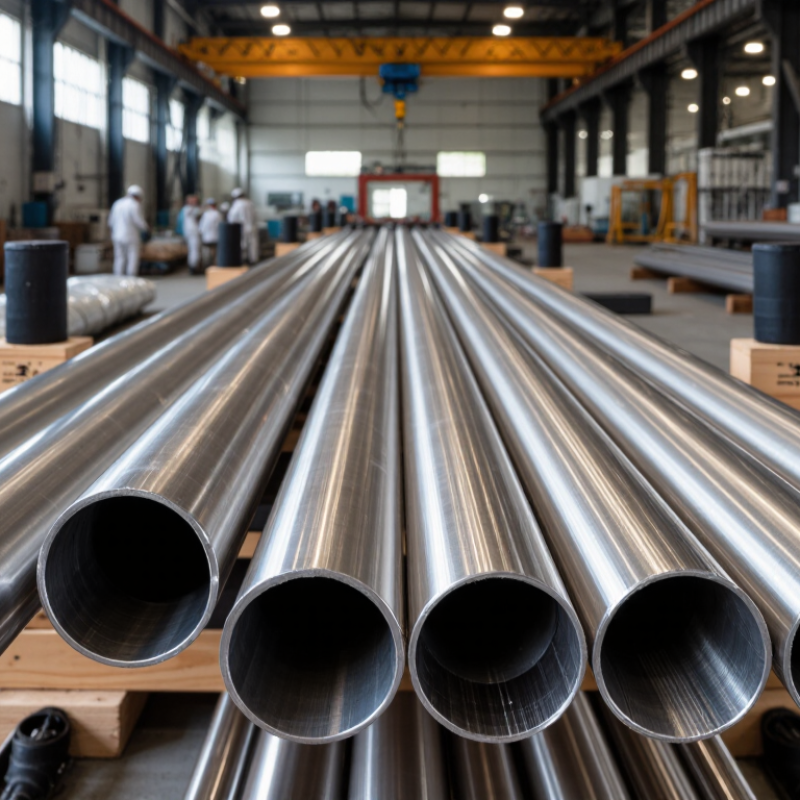
China Best 316L Stainless Steel Pipe Supplier?

What Is 316L Stainless Steel Pipe?

316L stainless steel pipe is an austenitic stainless steel tube designed for demanding service. Its main alloying elements include chromium, nickel, and molybdenum. The added molybdenum improves resistance to pitting caused by chlorides and saltwater. The “L” means low carbon.

It is solid metal.

This low carbon content reduces carbide precipitation after welding. That feature helps protect welded joints from intergranular corrosion. However, 316L is not immune to every environment. Strong acids, stagnant seawater, and contaminated surfaces can still cause damage. Proper material selection remains essential.

On fabrication projects, inspectors usually verify the heat number, wall thickness, outside diameter, and surface condition. Positive material identification can confirm the alloy before installation.

For welded pipe, clean preparation and controlled heat input matter greatly. Pickling and passivation may restore the protective surface after fabrication. A smooth internal finish also reduces deposits in food, pharmaceutical, and fluid-handling systems.

Common specifications include seamless and welded forms, with requirements covering chemical composition, mechanical properties, dimensions, and testing. Buyers should request mill certificates and relevant inspection records from the supplier.

A polished surface may look impressive, but it does not prove correct chemistry or pressure performance. That is an easy mistake.

The pipe should match the medium, temperature, pressure, connection method, and applicable standard. Even excellent 316L can fail when installation details are ignored.

Key Properties and Common Applications of 316L Pipe

316L stainless steel pipe is valued for its strong corrosion resistance and dependable service life. Its low carbon content helps reduce carbide precipitation after welding. Molybdenum improves resistance to pitting in chloride-rich environments, such as coastal air and brine systems. This matters near salt spray. A clean, smooth bore also supports hygienic fluid transfer and easier maintenance. In practical inspections, welded areas deserve close attention. Poorly cleaned welds may discolor or corrode earlier than the surrounding pipe. That detail is easy to miss. Pipe performance also depends on wall thickness, surface finish, forming quality, and installation conditions. Austenitic 316L usually remains tough across a broad temperature range, but it is not immune to every chemical attack.

Common applications include water-treatment pipelines, food-processing equipment, pharmaceutical transfer lines, marine structures, and heat exchangers. In a food plant, a polished internal surface can reduce residue around elbows and joints. In coastal facilities, correct welding and drainage often matter as much as alloy selection. A qualified supplier should provide material certificates, dimensional records, and test results linked to each batch. Buyers should verify the actual grade, seamless or welded construction, pressure requirements, and applicable standards. I would not choose 316L only because it sounds premium. Severe acids, stagnant chlorides, or poorly designed joints may still cause failure. Careful service analysis remains necessary.

Types, Standards, and Manufacturing Processes

China Best 316L Stainless Steel Pipe Supplier?

316L stainless steel pipe is selected for its low carbon content and molybdenum addition. It performs well in many corrosive environments. However, it is not immune to chloride attack.

Pipe type matters. Seamless pipe suits high-pressure service, while welded pipe often offers better cost control and dimensional consistency. Sanitary tubing requires smoother internal surfaces and stricter cleaning controls. Square and rectangular sections are also available for structural applications.

Common standards include ASTM A312 for seamless and welded pipe, ASTM A269 for general-purpose tubing, and ASTM A213 for heat-exchanger applications. European projects may specify EN 10216-5 or EN 10217-7. Chinese projects often reference GB/T 14976.

Buyers should confirm outside diameter, wall thickness, schedule, surface finish, and inspection class. Standard names alone are not enough. Some specifications overlap, but their testing requirements can differ.

Manufacturing usually starts with electric melting and refined chemical control. Seamless products are pierced, hot rolled, and sometimes cold drawn. Welded products are formed from strip, longitudinally welded, and inspected.

Solution annealing helps restore corrosion resistance after forming. Pickling and passivation remove scale and surface contamination. Typical checks include chemical analysis, tensile testing, hardness testing, hydrostatic testing, and ultrasonic inspection.

In practice, surface cleanliness is often underestimated. A bright pipe can still contain harmful residues. Mill certificates, traceability records, and sample inspection provide stronger evidence than appearance alone.

Supplier evaluation should remain practical, because no process is perfect.

How to Evaluate a China-Based 316L Pipe Supplier

China Best 316L Stainless Steel Pipe Supplier?

How to Evaluate a China-Based 316L Pipe Supplier

A reliable evaluation starts with the steel, not the website. Ask for heat numbers, chemical analysis, and mechanical test results for each production batch. The certificate should identify molybdenum content, carbon level, tensile strength, and heat treatment. Compare these values with the required ASTM, EN, or GB specification. Do not accept “316L” as sufficient evidence. It is only a grade name.

Request a sample pipe before placing a large order. Check its outside diameter, wall thickness, surface finish, straightness, and weld quality. Portable positive material identification testing can verify the alloy on arrival. For welded pipe, inspect the weld area carefully. A bright surface can still hide poor penetration. That mistake is expensive. Ask whether the supplier controls raw materials, welding procedures, annealing, and pickling internally or through subcontractors.

Traceability matters during a factory audit. Match the heat number on the pipe, packing list, and inspection report. Review calibration records for testing equipment and confirm how nonconforming products are handled. Clear answers usually matter more than polished sales language. Delivery planning also deserves evidence, including production capacity, packing methods, export experience, and corrective-action records. I have seen buyers focus heavily on price and overlook dimensional variation. That decision often creates installation delays, extra inspection, and wasted freight. A supplier’s communication should be tested with technical questions, not promises.

Quality Control, Certifications, Pricing, and Export Services

China Best 316L Stainless Steel Pipe Supplier?

Selecting a 316L stainless steel pipe supplier requires evidence, not attractive quotations. World Stainless reported global stainless crude steel production at about 58.4 million tonnes in 2023. This scale increases buyer choice, but also increases quality variation. Ask for heat-number traceability, chemical analysis, dimensional reports, and PMI results. Hydrostatic or eddy-current testing should match the purchase specification. ASTM A312 and ASTM A269 are common references, yet the selected standard must fit the application. A supplier’s ISO 9001 certification supports process control, but it does not replace product inspection. That distinction is often missed.

Export reliability matters just as much as metallurgy. Confirm EN 10204 3.1 documentation, packing details, mill test certificates, and container loading photographs. Pricing should identify grade, outside diameter, wall thickness, finish, tolerance, testing, and Incoterms. Commodity data from the International Trade Centre shows stainless-steel trade values can shift sharply with origin, specification, and market timing. The cheapest offer may exclude essential tests. It happens.

Tips: Compare three identical specifications. Request a recent inspection sample. Check whether certificates match the heat number. For coastal or chemical service, verify molybdenum content near 2–3%, rather than trusting “316L” on a label. Small gaps become expensive. A stronger purchase order should define acceptance criteria, packaging, delivery documents, and remedies for nonconformity. Suppliers may resist this detail. Buyers should still insist.

China Best 316L Stainless Steel Pipe Supplier? - Quality Control, Certifications, Pricing, and Export Services
Evaluation Dimension Relevant Data or Standard What a Qualified Supplier Should Provide Buyer Verification Point
Material Grade 316L austenitic stainless steel; low-carbon version of 316 with improved resistance to intergranular corrosion after welding. Heat number traceability, grade designation, chemical analysis, and mechanical test results. Confirm that the product is 316L rather than 316, 304L, or an unverified equivalent.
Typical Chemical Composition Common ASTM/AISI 316L limits include: C ≤ 0.030%, Cr 16.0–18.0%, Ni 10.0–14.0%, Mo 2.0–3.0%, Mn ≤ 2.0%, Si ≤ 1.0%, P ≤ 0.045%, S ≤ 0.030%. Mill test certificate with actual heat chemistry and applicable standard reference. Compare the certificate values with the specified standard and purchase order.
Common Pipe Standards ASTM A312ASTM A269EN 10216-5GB/T 14976 Manufacturing and inspection according to the standard selected for the application. Check whether the standard covers seamless or welded pipe, dimensions, tests, and permitted tolerances.
Manufacturing Method Seamless pipe is formed without a longitudinal weld; welded pipe is made from strip or plate with a welded seam. Clear identification of seamless or welded construction, welding process where applicable, and heat-treatment condition. Choose the method according to pressure, temperature, diameter, wall thickness, and project specifications.
Dimensional Range Typical commercial supply may include small-bore sizes from approximately DN6 to DN50 and larger sizes above DN50, with wall thickness selected by schedule or project specification. Outside diameter, wall thickness, length, ovality, straightness, and tolerance data. Specify nominal size, schedule or exact wall thickness, length tolerance, and end finish before ordering.
Surface Finish Common finishes include bright annealed, pickled and passivated, mechanically polished, and hygienic sanitary finishes. Surface-finish designation, roughness requirement where applicable, and photographs or inspection records. For food, pharmaceutical, and sanitary applications, define the maximum Ra value and internal-surface requirements.
Heat Treatment Solution annealing is commonly used for austenitic stainless steel pipe to restore corrosion resistance and ductility after forming or welding. Heat-treatment condition and records when required by the applicable standard or project specification. Verify that the heat-treatment condition matches the requested standard and service environment.
Quality Control Tests Typical controls include chemical analysis, tensile testing, hardness testing, dimensional inspection, visual inspection, hydrostatic or nondestructive testing, and intergranular-corrosion testing when specified. Inspection and test plan, batch records, test reports, and traceability from pipe to heat number. Confirm whether testing is performed on every pipe, each batch, or a defined sampling basis.
Nondestructive Examination ASTM A312 may require hydrostatic or nondestructive electric testing; eddy-current and ultrasonic testing may be added by agreement. Test method, acceptance level, calibration records, and inspection report. State the required NDT method and acceptance criteria in the purchase order.
Documentation EN 10204 Type 3.1 inspection certificate is commonly used for traceable metallic products; Type 3.2 involves additional independent or purchaser-appointed inspection. Commercial invoice, packing list, certificate of origin where required, mill test certificate, and inspection documents. Ensure all documents show consistent grade, quantity, dimensions, heat number, and standard.
Management Certification ISO 9001:2015 certification indicates a quality-management system assessed against the ISO 9001 requirements; it does not by itself certify every product. Valid certificate scope, issuing certification body, validity period, and manufacturing-site address. Check that the certificate covers the relevant production and inspection activities.
Regulatory Compliance For European pressure-equipment applications, compliance may involve the Pressure Equipment Directive 2014/68/EU, depending on product classification and service conditions. Declaration or assessment documents applicable to the specific order and end use. Do not treat a general ISO certificate as a substitute for project-specific regulatory compliance.
Indicative Export Pricing Indicative stainless-steel pipe prices can vary widely, commonly about USD 3–12 per kg for standard 316L products, depending on size, wall thickness, finish, quantity, testing, and market conditions. Formal quotation showing grade, standard, size, finish, quantity, trade term, currency, and quotation validity. Compare like-for-like specifications; a lower price may exclude testing, polishing, special packaging, or freight.
Price Variables Main cost drivers include nickel and molybdenum market prices, pipe weight, seamless or welded construction, surface treatment, tolerances, order quantity, and inspection requirements. Transparent breakdown or clear scope of included services and costs. Ask whether the price is fixed, indexed, or subject to raw-material adjustment.
Minimum Order Quantity MOQ is not universal; standard sizes are generally easier to source in small quantities, while custom dimensions and special finishes may require a higher minimum order. MOQ, production lead time, sample policy, and surcharge for small orders. Confirm whether mixed sizes or grades can be consolidated in one shipment.
Export Packaging Common protection includes plastic caps, individual or bundle wrapping, waterproof outer material, steel strapping, and seaworthy pallets or crates. Packaging specification suitable for container transport and long-distance handling. For polished or sanitary pipe, require separation materials that prevent scratches and contamination.
Shipping Documents Typical documents include commercial invoice, packing list, bill of lading or sea waybill, certificate of origin where required, and quality certificates. Document checklist aligned with the destination country's customs and import requirements. Confirm consignee, HS classification, country-of-origin rules, and document-language requirements before shipment.
Trade Terms Common Incoterms include EXW, FOB, CFR, CIF, FCA, and DAP. Responsibilities for freight, insurance, export clearance, and import clearance differ by term. Quotation with the named place or port and the selected Incoterms rule and year. Request a landed-cost comparison when evaluating suppliers from different regions.
Lead Time Standard sizes may often be produced within several weeks; custom sizes, special finishes, third-party inspection, and peak demand can extend the schedule. Production completion date, inspection date, estimated transit time, and shipment milestones. Separate manufacturing lead time from ocean transit time and customs clearance time.
Best-Fit Applications 316L is commonly selected for chemical-processing equipment, marine and coastal environments, food-processing systems, pharmaceutical equipment, and architectural uses requiring enhanced corrosion resistance. Application-specific material recommendation and limitations. Review chloride concentration, temperature, pressure, welding condition, and cleaning chemicals before final selection.
Note: Pricing, lead times, available sizes, and certification requirements are indicative and should be confirmed against the current quotation, applicable standard, destination-country regulations, and project specifications.

FAQS

What documents should I request from a 316L pipe supplier?

Request heat numbers, chemical analysis, mechanical results, and heat-treatment records. Check molybdenum, carbon, tensile strength, and elongation. Compare every value with the agreed specification. “316L” alone proves very little.

Why is a heat number important?

It connects the pipe to its production batch. Match it across the pipe, packing list, and inspection report. A missing match weakens traceability. That small gap matters.

Should I inspect a sample before ordering?

Yes. Measure outside diameter, wall thickness, straightness, and surface finish. Inspect the weld under bright light. Good appearance can hide weak penetration. I would never rely on photographs alone.

How can I confirm the pipe alloy after delivery?

Use positive material identification testing on arrival. Verify the alloy’s chromium, nickel, and molybdenum content. For demanding service, check molybdenum near 2–3%. Labels can be wrong.

What testing should the purchase order include?

Define chemical testing, dimensional checks, and mechanical testing. Add hydrostatic or eddy-current testing when the specification requires it. State acceptance limits clearly. Vague wording creates arguments later.

How should I evaluate factory quality control?

Ask who controls raw materials, welding, annealing, and pickling. Review equipment calibration records. Check how nonconforming pipes are isolated and corrected. Polished sales language is not evidence.

What should a reliable export package contain?

Confirm inspection certificates, packing details, and container-loading photographs. Require documents linked to the correct heat number. Check export experience and delivery planning. Freight problems are rarely cheap.

How should I compare supplier prices?

Compare three identical specifications. Include grade, diameter, wall thickness, finish, tolerance, testing, packing, and delivery terms. The cheapest quotation may exclude essential inspections. It happens. I have seen price savings become installation delays.

Conclusion

Choosing the right China-based supplier for Stainless Steel Pipe 316l requires a clear understanding of the product, its performance, and the supplier’s capabilities. 316L stainless steel pipe is a low-carbon, molybdenum-alloyed material known for excellent corrosion resistance, weldability, and durability, making it suitable for chemical processing, food and beverage systems, marine environments, pharmaceuticals, and construction. Buyers should compare seamless and welded options, dimensions, surface finishes, and applicable standards according to project requirements.

A reliable supplier should demonstrate consistent manufacturing processes, including forming, welding, heat treatment, and finishing, supported by strict quality control. Important evaluation factors include material traceability, inspection reports, testing procedures, certifications, production capacity, and experience with international export requirements. Competitive pricing is valuable, but it should be assessed alongside product quality, delivery reliability, packaging, communication, and after-sales support. By reviewing these factors carefully, buyers can select a dependable partner and obtain 316L pipe that performs safely and consistently in demanding applications.

Sophia

Sophia

Sophia is a dedicated marketing professional with an exceptional depth of knowledge about her company's products and services. With a keen understanding of market trends and customer needs, she crafts insightful blog posts that not only inform but also engage readers, enriching the company’s online......