 Sihe Steel
Sihe Steel
Sihe Steel
China Best Stainless Steel 304 Pipe Manufacturers?
China remains a major force in stainless-steel production and pipe fabrication. The International Stainless Steel Forum reported approximately 58.4 million tonnes of global crude stainless-steel production in 2023. China contributed about 36.7 million tonnes, representing nearly 63% of the worldwide total. These figures show manufacturing capacity, but capacity alone does not prove quality.
Stainless Steel 304 Pipe is widely selected for food equipment, architectural systems, chemical service, and general industrial transport. Its nominal chromium and nickel content supports corrosion resistance, cleanability, and reliable forming. However, performance depends on more than the grade name. Tube wall thickness, weld penetration, surface finish, heat treatment, and traceability all matter. A bright surface can still hide poor internal welding.
ASTM A312, ASTM A269, and EN 10217 are commonly reviewed during technical purchasing. Buyers should request mill test certificates, PMI results, dimensional records, hydrostatic testing, and applicable inspection reports. ISO 9001 certification is useful, but it should not replace batch-level verification.
Materials expert John C. Lippold has stressed, “Welding is a materials issue, not merely a fabrication issue.” That principle deserves attention when comparing Chinese suppliers. A technically strong manufacturer should explain its welding procedure, filler metal selection, and post-weld inspection clearly.
The lowest quotation may look attractive. It may also omit testing details. This is where many comparisons become incomplete. Our guide examines China’s leading Stainless Steel 304 Pipe manufacturers through documented production experience, standards compliance, export capability, and practical quality evidence. The ranking is not absolute; application requirements can change the answer.
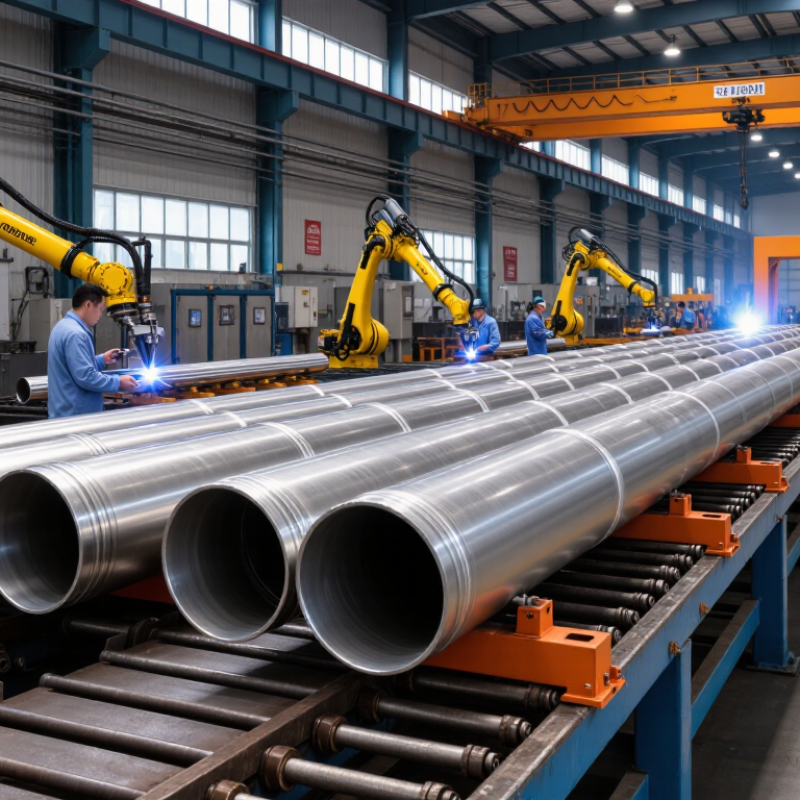
A reliable China stainless steel 304 pipe manufacturer proves performance through consistent processes, not attractive catalogs. Buyers should review factory records, production capacity, and quality-control procedures before discussing price. A clean workshop matters.
The manufacturer should identify the steel grade, melting number, pipe dimensions, and surface condition on every shipment. Material certificates must match the actual batch, not a copied template. Independent PMI testing can confirm nickel and chromium content. Hydrostatic testing, dimensional checks, and visual inspection should follow the agreed specification. For demanding projects, ask for sample reports and calibrated equipment records. ISO 9001 certification can support confidence, but it does not replace direct verification.
Traceability is equally important. Each bundle should carry readable labels linked to inspection documents and packing records. During a factory audit, check welding areas, storage conditions, and protection against carbon-steel contamination. Small details reveal discipline. A manufacturer that answers technical questions clearly is usually easier to manage after the order. Yet no supplier is perfect. Even a capable factory may face delays, surface marks, or communication gaps. Confirm tolerances, packaging, delivery terms, and corrective procedures in writing. Pre-shipment inspection remains worthwhile, especially for large quantities or critical applications. Good sourcing requires evidence, patience, and a willingness to question convenient answers.
| Evaluation Dimension | Reliable Manufacturer Benchmark | Relevant Standard or Reference | Recommended Verification Evidence | Why It Matters |
|---|---|---|---|---|
| Material grade | 304 or 304L austenitic stainless steel with heat-by-heat traceability | ASTM A312/A312M, ASTM A269/A269M, EN 10217-7, or equivalent purchase specification | Mill test certificate showing grade, heat number, chemical composition, and mechanical properties | Confirms that the supplied pipe matches the specified stainless steel grade rather than a lower-cost substitute |
| Chemical composition | Typical 304 composition includes approximately 18–20% chromium and 8–10.5% nickel; exact limits depend on the applicable standard | ASTM A240/A240M and the selected pipe standard | Heat analysis and product analysis reports from an accredited laboratory or approved testing facility | Chromium supports corrosion resistance, while nickel stabilizes the austenitic structure |
| Low-carbon option | 304L available when welding or improved resistance to intergranular corrosion after welding is required; carbon is commonly limited to 0.030% maximum under ASTM specifications | ASTM A312/A312M and ASTM A269/A269M | Certificate identifying 304L and confirming the applicable carbon limit | Lower carbon reduces the risk of chromium-carbide precipitation in welded areas |
| Manufacturing process | Seamless or welded construction clearly stated, with controlled forming, welding, heat treatment, and pickling or passivation processes | ASTM A312/A312M, ASTM A269/A269M, EN 10217-7 | Process flow, welding procedure qualification, heat-treatment records, and production inspection reports | Process control affects weld integrity, dimensional stability, surface condition, and service life |
| Dimensions and wall thickness | Outside diameter, wall thickness, length, and tolerance match the purchase order and selected standard | ASME B36.19M for stainless steel pipe dimensions; ASTM product standards for tolerances | Calibrated measuring records, inspection plans, and dimensional inspection reports | Accurate dimensions ensure fit-up, pressure design compliance, and compatibility with valves and fittings |
| Surface finish | Finish selected according to application, such as mill finish, annealed and pickled finish, or polished finish | ASTM A269/A269M, ASTM A480/A480M, and customer specification | Surface inspection records, agreed roughness values where applicable, and photographs before shipment | A clean, uniform surface improves hygiene, corrosion performance, and appearance |
| Weld quality | Welded pipes have controlled welding parameters, qualified operators, and suitable non-destructive testing when specified | Applicable ASTM, EN, ASME, or project-specific inspection requirements | Welding procedure qualification records, operator qualifications, weld inspection reports, and test results | Reduces the risk of leakage, lack of fusion, cracking, and premature failure |
| Mechanical properties | Typical annealed 304 requirements include tensile strength of at least 515 MPa and yield strength of at least 205 MPa under ASTM A312/A312M; verify the governing standard | ASTM A312/A312M or the specified product standard | Tensile-test results, yield-strength results, elongation data, and test temperature where relevant | Confirms the pipe can withstand the required forming, handling, and service loads |
| Pressure and leak testing | Hydrostatic or approved non-destructive electric testing performed when required by the applicable standard | ASTM A312/A312M and purchase-order requirements | Hydrostatic or NDE reports identifying test method, acceptance criteria, and pipe traceability | Detects leaks and discontinuities that may not be visible during a visual inspection |
| Corrosion protection | Appropriate annealing, pickling, passivation, cleaning, and contamination control are available | ASTM A380/A380M and ASTM A967/A967M where chemical passivation is specified | Passivation records, cleaning procedure, water-quality controls, and optional corrosion-test results | Removes surface contamination and helps preserve the passive chromium-oxide layer |
| Quality management | Documented quality management system with defined inspection, nonconformance, corrective-action, and traceability procedures | ISO 9001:2015 or an equivalent independently audited system | Current certificate, scope of certification, audit details, and quality manual extracts where permitted | A repeatable system is more reliable than informal quality checks alone |
| Inspection independence | Willingness to accept purchaser inspection or independent third-party inspection for critical orders | Inspection and Test Plan agreed before production | Third-party inspection reports, hold-point records, and signed release documentation | Independent verification reduces commercial and technical risk |
| Documentation package | Complete documentation supplied before or with shipment and linked to heat numbers and pipe markings | EN 10204 Type 3.1 or Type 3.2 certification when required by contract | Material certificates, dimensional reports, test results, packing list, certificate of conformity, and traceability records | Clear records support receiving inspection, regulatory compliance, and future claims |
| Packaging and marking | Pipe ends protected, bundles secured, surfaces isolated from carbon-steel contamination, and markings remain legible | Purchase specification and applicable handling requirements | Packing photographs, marking samples, bundle identification, and shipping inspection checklist | Proper packaging prevents dents, scratches, moisture damage, and loss of traceability during transport |
| Commercial reliability | Clear quotation, realistic lead time, stable communication, transparent tolerances, and written warranty or claim procedure | Purchase contract, technical data sheet, and agreed quality clauses | Signed technical agreement, production schedule, reference samples, and documented after-sales process | Reliable communication and contractual clarity reduce delays, disputes, and unexpected specification changes |
Note: Chemical limits, mechanical properties, dimensional tolerances, and testing requirements must always be confirmed against the exact standard and purchase specification selected for the application.
Look for an ISO 9001 quality system and EN 10204 3.1 material certificates. Pressure projects may require ASTM A312 or an equivalent standard. Requirements vary by project.
It should list the heat number, chemical composition, mechanical properties, dimensions, and test results. Compare the heat number with the pipe bundle and inspection report.
Traceability connects each pipe to its production records. The heat number should match the label, bundle, and certificate. Missing links create avoidable uncertainty.
Ask about positive material identification, hydrostatic testing, and eddy-current inspection. The correct tests depend on service conditions. More testing is not always better without a clear purpose.
No. A polished surface may hide uneven wall thickness or dimensional problems. Check measurements, tolerances, and inspection records. Appearance can mislead.
Request recent production records, monthly tonnage, mill hours, welding lines, and finished stock details. Stated maximum output is not enough. Peak-order handling should preserve inspection control.
Confirm outside diameter, wall thickness, length tolerance, surface finish, and annealing requirements. Request drawings, sample approval, and dimensional records. Written limits are safer than friendly promises.
Check moisture protection, bundle labels, container loading photos, and document accuracy. Confirm customs paperwork and destination packaging requirements. Independent pre-shipment inspection adds cost, but may expose problems before shipment.
The supplier should identify tooling limits, minimum order quantities, and realistic lead times. Quick acceptance may sound helpful, but it deserves careful questioning. I would not treat optimism as engineering evidence.
Choosing the best China Stainless Steel 304 Pipe manufacturer requires more than comparing prices. A reliable supplier should demonstrate consistent product quality, transparent production processes, experienced technical staff, and a strong record of on-time delivery. Buyers should review material traceability, dimensional accuracy, surface finish, testing procedures, and customer service capabilities. Certifications and compliance with recognized quality standards can provide additional confidence that the Stainless Steel 304 Pipe meets required mechanical, chemical, and safety specifications.
Production capacity, customization options, packaging, export experience, and communication efficiency are also important considerations. Manufacturers should be able to support different sizes, wall thicknesses, finishes, connection methods, and project quantities while maintaining stable quality. Before making a decision, compare quotations alongside inspection reports, certifications, lead times, warranty terms, and after-sales support. The most suitable manufacturer is the one that offers a balanced combination of quality, reliability, flexibility, technical expertise, and total value for your specific application.
