
Sihe Steel Sihe Steel

7 Tips for Buying Stainless Steel Pipe 304?

Time:2026-09-10 Author:Madeline
0%

Buying Stainless Steel Pipe 304 seems simple until the first shipment arrives. A polished surface can hide incorrect dimensions, weak documentation, or unsuitable wall thickness. This guide introduces seven practical tips for evaluating quality, cost, and supplier reliability before placing an order.

Begin with the application, not the sales quotation. Check the pipe’s outside diameter, wall thickness, length, surface finish, and required connection method. A pipe used for food processing may need a smoother interior than one used for general fabrication. Temperature, moisture, chemicals, and pressure also influence the correct specification. Small details matter.

Ask the supplier for material certificates, test results, and traceable batch information. Confirm that the stated 304 grade matches the project specification and relevant industry requirements. Trusted manufacturers should explain their testing process clearly, rather than offering vague promises. Inspect sample surfaces for scratches, dents, discoloration, and uneven polishing. A bright finish is not proof of excellent metallurgy.

Price deserves careful attention. The lowest quote may exclude inspection, packaging, delivery, or dimensional tolerances. It may also reflect thinner material than expected. That can be misleading. Compare complete offers using the same specifications and quantity. Review welding quality, protective caps, moisture-resistant packaging, and replacement terms. I have seen buyers focus too heavily on unit price and overlook preventable handling damage. That mistake is easy to repeat.

A reliable purchase combines technical judgment, documented evidence, and practical inspection. Even experienced buyers should recheck assumptions. This guide will help you ask sharper questions and avoid costly surprises.
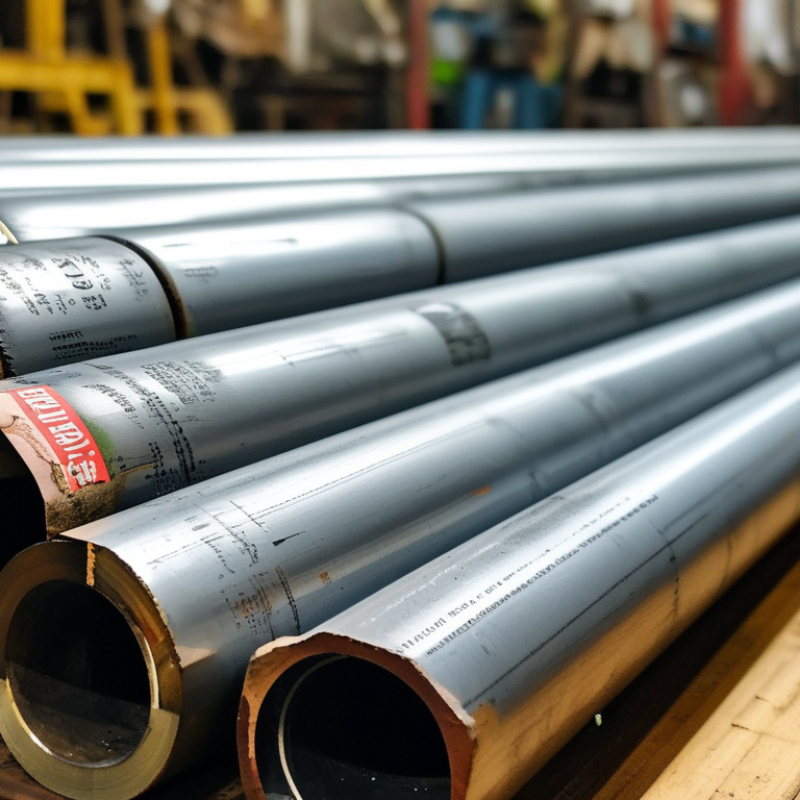
7 Tips for Buying Stainless Steel Pipe 304?

Define 304 Stainless Steel: 18% Chromium and 8% Nickel

7 Tips for Buying Stainless Steel Pipe 304

304 stainless steel is an austenitic grade containing about 18% chromium and 8% nickel. Chromium creates a thin passive film that helps resist rust. Nickel improves toughness, formability, and corrosion performance. These percentages are nominal, not always exact. Check the material certificate before accepting a shipment.

Confirm the grade through chemical analysis or positive material identification. Review the pipe’s outside diameter, wall thickness, length, and tolerance. Choose welded pipe for many general applications, but consider seamless pipe for demanding pressure service. Inspect the inner and outer surfaces for dents, cracks, weld defects, or heavy discoloration. Surface finish matters more than many buyers expect.

Ask for the applicable manufacturing standard and pressure information. Verify that the pipe suits water, food, chemical, or high-temperature service. I once focused too much on price and overlooked the wall-thickness tolerance. That mistake changed my purchasing checklist. Also examine end preparation, protective packaging, and traceable heat numbers. 304 performs well in many environments, but it is not ideal for every chloride-rich application. A careful review of the operating medium can prevent an expensive replacement.

Verify Pipe Standards: ASTM A312, A213, and ASME Compliance

When buying 304 stainless steel pipe, verify the required standard before comparing price or surface finish. ASTM A312 commonly covers seamless and welded austenitic stainless steel pipe for demanding service. ASTM A213 applies mainly to seamless tubes for boilers, superheaters, and heat exchangers. It is not automatically the correct document for every pipe purchase. Check the application carefully.

Ask for the material test report, or MTR, before delivery. It should identify the heat number, grade, chemical composition, tensile results, dimensions, and test records. Match that heat number with the marking on the pipe. A quick check with a caliper can reveal an incorrect wall thickness. A polished surface can still hide poor documentation. This is easy to miss.

ASME compliance requires more than an ASME reference on a quotation. Confirm the applicable construction code, design pressure, temperature, weld requirements, and inspection records. For welded pipe, review welding procedure qualifications and nondestructive examination results when specified. For pressure service, request hydrostatic testing evidence or an approved alternative. Independent inspection adds confidence, especially for critical lines. However, inspectors can also miss small inconsistencies. Keep traceable photographs and signed records. That extra discipline supports reliable purchasing and later audits.

7 Tips for Buying Stainless Steel Pipe 304: Verify ASTM A312, A213, and ASME Compliance

For 304 stainless steel, ASTM A312 covers pipe for general and high-temperature service, while ASTM A213 covers seamless boiler, superheater, and heat-exchanger tubes. ASME SA-312 and SA-213 are the corresponding ASME material specifications. The chart shows commonly specified minimum mechanical requirements for TP304.

Before purchasing, confirm the exact specification and grade, review the material test certificate, verify tensile strength, yield strength, and elongation, check dimensions and schedule, confirm heat-treatment requirements, inspect marking and traceability, and ensure the order references the applicable ASTM or ASME designation.

Choose Pipe Size: NPS, Schedule, Wall Thickness, and Tolerance

Buying 304 stainless steel pipe starts with the right size, not the lowest quote. NPS means nominal pipe size, while the outside diameter remains standardized. For example, ASME B36.19M lists NPS 2 pipe with a 2.375-inch outside diameter. The schedule then changes the wall thickness, not the nominal size. Schedule 10S is 0.109 inch thick, while Schedule 40S is 0.154 inch for NPS 2.

Check the service conditions carefully. Thin-wall Schedule 10S can reduce weight and improve flow, but it offers less allowance for pressure, handling damage, and corrosion loss. Schedule 40S provides more metal, although it may increase cost and welding effort. ASME B36.19M gives the dimensional basis; pressure design still requires the applicable code and engineering calculation. A pipe chart alone is not enough.

Tolerance matters more than many buyers expect. ASTM A312/A312M commonly permits wall thickness to fall 12.5% below nominal, subject to the applicable product table. A 0.154-inch wall could therefore measure near 0.135 inch at the lower limit. That difference is real. Request mill test reports, heat numbers, and measured dimensions at several points. ASTM A999/A999M also addresses general requirements for alloy and stainless pipe. Do not assume every “304” pipe has identical performance. Surface finish, seamless or welded construction, annealing, and actual chemistry can change the result. I have seen purchasing teams choose by NPS alone. It looked efficient. It was not.

Compare Surface Finishes: Ra Values from 0.8 to 3.2 μm

When buying 304 stainless steel pipe, compare the surface finish, not only the alloy certificate.

Industry references, including ASTM A270/A270M and ASME BPE, use Ra measurements to evaluate internal surfaces.

Ra 0.8 μm
equals approximately 32 microinches.
Ra 1.6 μm
equals 63 microinches.
Ra 3.2 μm
equals 126 microinches.

The lower value usually indicates a smoother surface, with fewer places for residue to remain. Smoother is not always better.

Ask for the measured Ra value, inspection method, and measurement direction. A supplier should identify whether testing covered the inner diameter, outer diameter, or both. Confirm that 304 or 304L is stated on the material report. Check weld zones separately.

Request photos under consistent lighting, because polished metal can hide scratches. For hygienic service, compare the stated finish with the applicable ASTM or ASME specification, rather than accepting “mirror finish” as proof. That phrase lacks precision.

Also inspect handling marks, dents, and grinding lines. A polished pipe can still contain local defects.

I would choose Ra 0.8 μm for demanding cleanability, while Ra 1.6 μm may suit many general process lines. Ra 3.2 μm can be practical for less sensitive service, but the decision should reflect cleaning conditions, flow, and contamination risk.

Recheck the specification before ordering; this is where many purchasing decisions become unnecessarily expensive.

Check Testing, Certification, Pricing, and Delivery Terms

Tip 1: confirm the grade through chemical testing. ASTM A312 covers many seamless and welded austenitic pipes, while 304 typically contains 18–20% chromium and 8–10.5% nickel.

Tip 2: request heat numbers linked to mill test reports.

Tip 3: require independent PMI testing when the application carries serious pressure or corrosion risks. Small paperwork gaps matter.

Tip 4: check certification carefully. An EN 10204 3.1 certificate should identify the heat, dimensions, mechanical results, and applicable standard.

The International Stainless Steel Forum reported global stainless crude steel production at about 58.4 million tonnes in 2023. That scale does not guarantee quality.

Traceability still depends on the individual batch. Review the certificate, not just the seller’s promise.

Tip 5: compare pricing by weight, schedule, surface finish, and testing scope. A low quote may exclude freight, packaging, or inspection fees.

Tip 6: ask whether the price is fixed. Nickel volatility can alter stainless costs before production starts. This is easy to overlook.

Tip 7: clarify delivery terms in writing. Confirm lead time, shipment date, Incoterms, export documents, and damage responsibility.

Use moisture-resistant wrapping and capped ends for long-distance transport.

A practical mistake is accepting a fast dispatch promise without checking stock evidence. The cheapest order can become the slowest one.

FAQS

: Which standard should apply to 304 stainless steel pipe?

: ASTM A312 commonly covers seamless and welded austenitic stainless steel pipe. ASTM A213 mainly covers seamless tubes for boilers, superheaters, and heat exchangers. Do not select a document automatically. Check the service carefully.

What should an MTR include?

The material test report should show the heat number, grade, chemical composition, and tensile results. It should also list dimensions and required test records. Match the heat number with the pipe marking. Paperwork matters.

Can a polished surface prove good pipe quality?

No. A bright surface can hide incorrect wall thickness or incomplete documentation. Use a caliper to check several locations. Also review the MTR and traceable inspection records. Appearance is not proof.

What does NPS describe?

NPS means nominal pipe size. It does not directly equal the measured outside diameter. For example, NPS 2 has a 2.375-inch outside diameter. The schedule changes wall thickness, not nominal size.

How do Schedule 10S and Schedule 40S differ?

For NPS 2, Schedule 10S is 0.109 inch thick. Schedule 40S is 0.154 inch thick. Schedule 10S reduces weight and may improve flow. Schedule 40S provides more metal for pressure and handling. More metal means more cost.

Is a pipe chart enough for pressure design?

No. A dimensional chart does not replace engineering calculations. Design pressure, temperature, corrosion allowance, and the applicable code must be reviewed. Thin walls may leave less protection against damage or material loss. This is easy to underestimate.

How much wall thickness variation can occur?

ASTM A312/A312M commonly allows wall thickness to fall 12.5% below nominal. A nominal 0.154-inch wall could measure near 0.135 inch. Measure several points, not just one location. Small differences can matter.

What should be checked for welded pipe?

Review welding procedure qualifications and required nondestructive examination results. For pressure service, request hydrostatic test evidence or an approved alternative. Independent inspection can add confidence. Inspectors can still miss inconsistencies. Keep signed records and clear photographs.

Conclusion

Buying Stainless Steel Pipe 304 requires careful attention to material quality, standards, dimensions, surface condition, and purchasing terms. This grade typically contains about 18% chromium and 8% nickel, providing good corrosion resistance and durability for many industrial and general applications. Buyers should verify that the pipe complies with suitable standards, such as ASTM A312 or ASTM A213, and meets relevant ASME requirements when applicable.

Before placing an order, confirm the required NPS size, schedule, wall thickness, and dimensional tolerances to ensure proper installation and performance. Surface finish is also important, especially for hygienic or appearance-sensitive applications; Ra values between 0.8 and 3.2 μm may be selected according to actual needs. Finally, review testing procedures, material certificates, inspection records, pricing, minimum order conditions, lead time, packaging, and delivery terms. A complete comparison of these factors can help ensure that the selected Stainless Steel Pipe 304 offers reliable quality and suitable overall value.

Madeline

Madeline

Madeline is a dedicated marketing professional with a wealth of expertise in our company's core offerings. With a keen understanding of the industry, she brings a unique perspective to her role, consistently delivering high-quality content that highlights the superior aspects of our products. As......